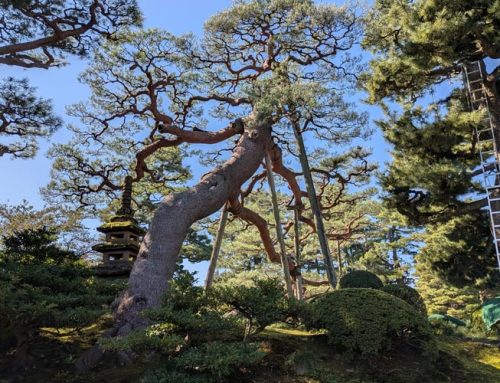

It’s always wise to take some time and look at how things are done elsewhere. In our case, OUTHOUSE recently had the chance to dodge some of the winter chill and head to Europe for a few weeks – which is a perfect time to take in some summer gardens.
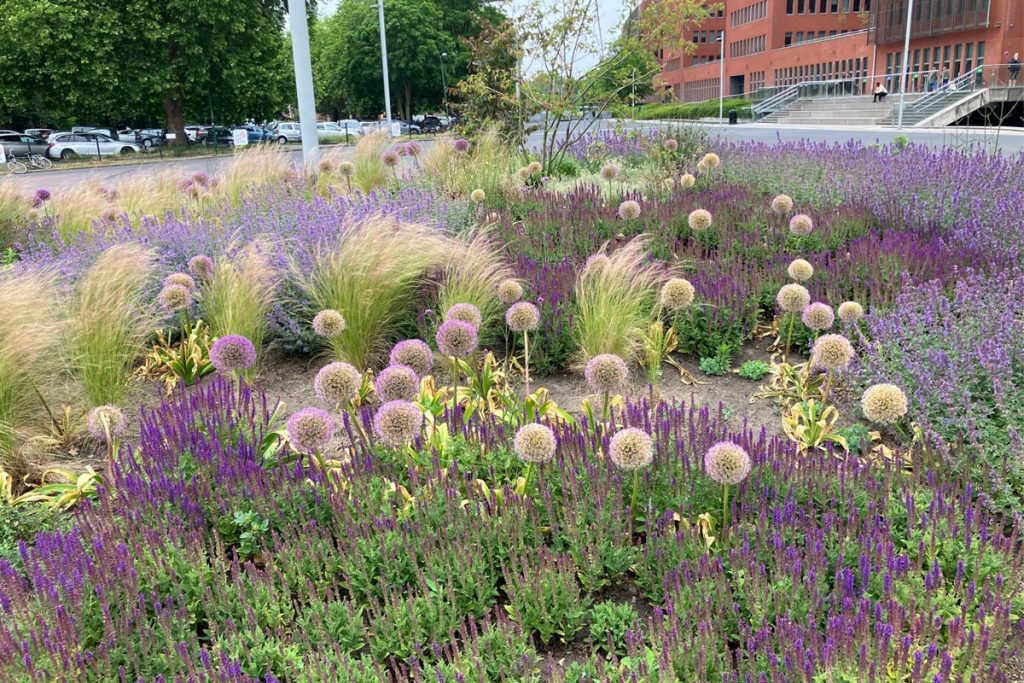
This street planting outside the train station in Bruges, Belgium, is a great example of how our pragmatic, municipal green spaces can be made more vibrant and engaging. The garden features dense planting of perennials in a naturalistic style, using Salvia nemorosa, catmint, alliums, and grasses such as Calamagrostis intermingled with shrubs and small trees – the planting flowing in and out in drifts. This style of planting is high impact in flowering season, can be designed to offer successive seasons of flower for insect and animal food value, and is ultimately low maintenance – it’s likely this garden is simply mown down once a year in winter to refresh the planting.
Of course, we can’t simply transplant this exact scheme from Bruges to Sydney, and many of our native plants are not perennials but woody shrubs. However, similar approaches have been tested in parts of Australia. The Woody Meadows project is an ongoing experiment based out of the University of Melbourne looking at treating public plantings of native shrubs in an analogous way, pruning hard on a yearly basis to provoke perennial-like habits and manage size and vigour. Planting systems like these offer an important way forward to increasing biodiversity in our cities and suburban areas, where unfortunately lawn, exotic trees and asphalt still dominate.
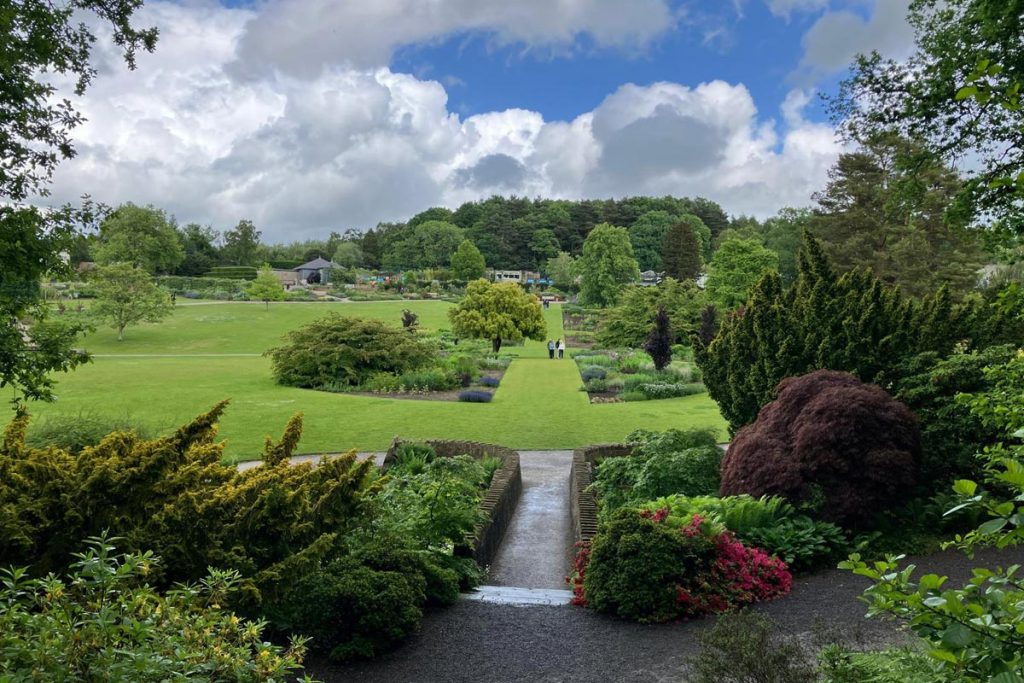
For a completely different experience, the RHS garden at Harlow Carr takes us to a more traditional rambling style of English garden. The Main Borders seen above feature prairie style planting, a more ornamental stylistic relative of the new perennial style we saw at Bruges station. The park-like surrounds give full focus to the floral and foliar display created in the Borders, but this is a luxury we can’t readily achieve in small Sydney back yards! So what to take away from Harlow Carr?
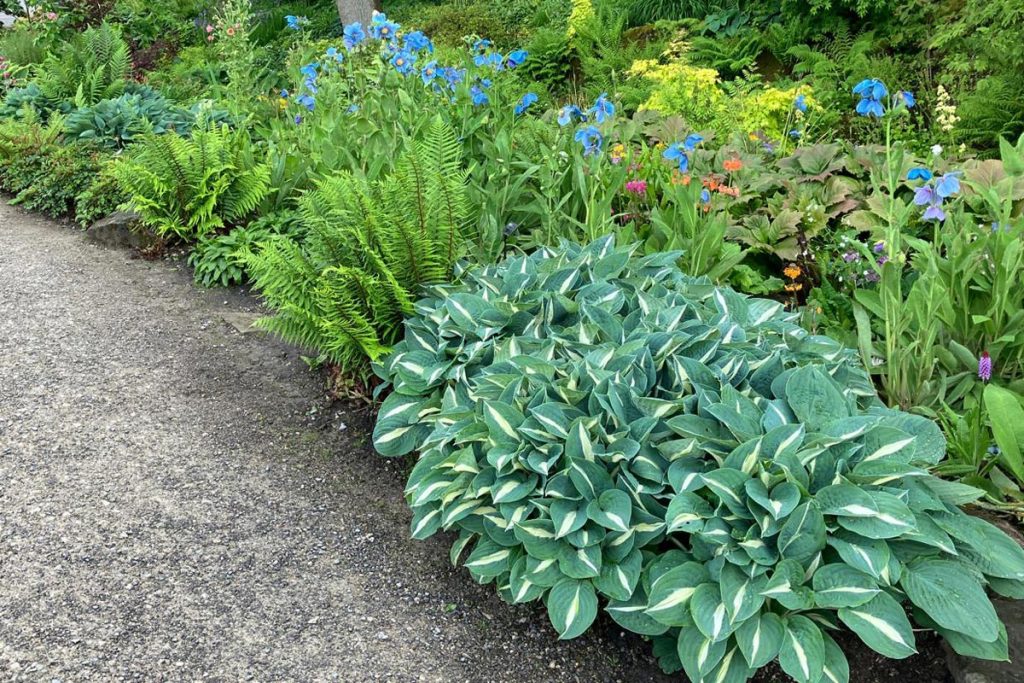
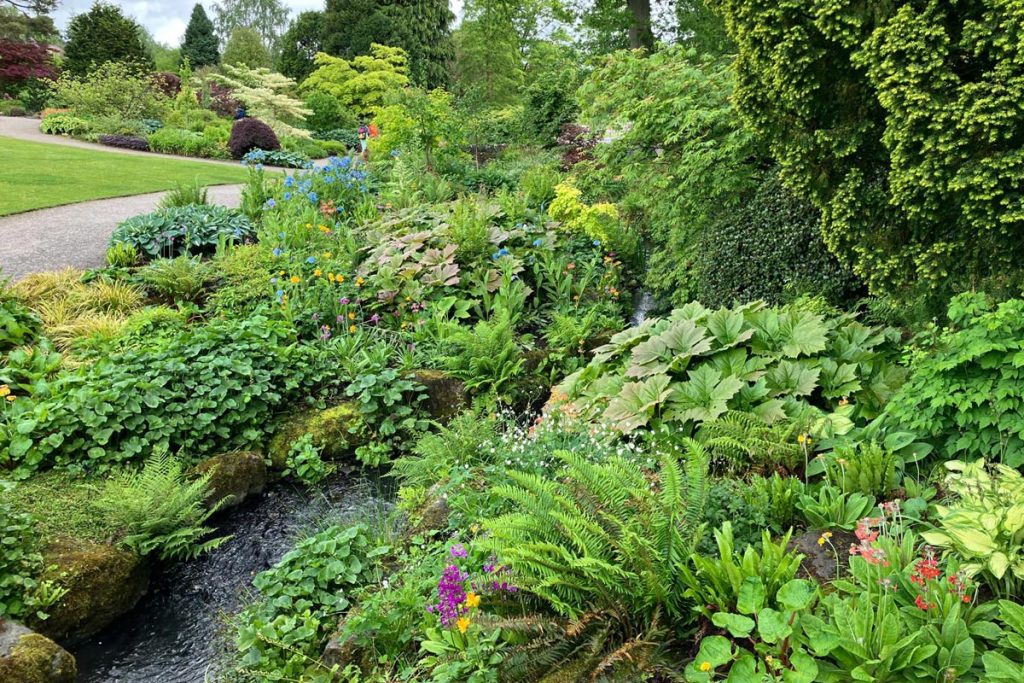
Perhaps it’s not the context, but the detail! Hostas and ferns grown in part sun aren’t likely to survive an Australian summer (well, perhaps in Tasmania) but the combination of colours and textures here manages to evoke the feeling of a traditional border using a contemporary, pared back palette and a focus on bold form. In our opinion, ferns are a greatly underused category of plants in home gardens – given the right conditions they are surprisingly tough, long lived and low maintenance, and they provide a unique texture in a landscape.
Overall, we can see how design principles are applied and how we might apply them in our own context: randomness and repetition, contrast, complementary colours, texture and form. While these borders are comparatively huge, it’s entirely possible to apply the same ideas on the scale of a residential garden.